作者:张雅楠,独立研究者,中国上海市松江区九亭镇涞寅路106弄56号303室,201615,+8613816757907,zeyarna@163.com, zeyarna@gmail.com
因神经技术侵权原因导致无法保护知识产权,所以及时在个人自媒体发布相关手稿,其知识产权及受害者身份由上海市公安局和上海市政府保护。知识产权声明详见:https://zeyarna.blog/2025/07/19/statement-on-academic-intellectual-property-rights%ef%bc%8c%e5%ad%a6%e6%9c%af%e7%9f%a5%e8%af%86%e4%ba%a7%e6%9d%83%e5%a3%b0%e6%98%8e/
Author: Zhang Yanan, Independent Researcher, Room 303, No. 56, Lane 106, Laiyin Road, Jiuting Town, Songjiang District, Shanghai, China, 201615, +8613816757907,zeyarna@163.com, zeyarna@gmail.com
Due to the infringement of neurotechnology, the intellectual property rights cannot be protected, and the relevant manuscripts are published in personal self-media in a timely manner, and their intellectual property rights and victim identities are protected by the Shanghai Municipal Public Security Bureau and the Shanghai Municipal Government. The intellectual property notice is available at: https://zeyarna.blog/2025/07/19/statement-on-academic-intellectual-property-rights%ef%bc%8c%e5%ad%a6%e6%9c%af%e7%9f%a5%e8%af%86%e4%ba%a7%e6%9d%83%e5%a3%b0%e6%98%8e/
【人脑神经技术人工智能HNAI的定义】
- 定义:以复制和提纯人类智慧产生机械自动化的机器智能的实现方式,并不是数学模型和数学仿真,而是人类智慧。这个不同于利用数学抽象的普通人工智能,也不同于对于人脑生物结构数学仿真的类脑人工智能。
- 遵从人工进化不能超越自然进化的科学哲学。
- 不关注机器学习和关注于人类学习和创新,同时有条件的将人类学习和创新的成果高速的复制转化至机器智能算法。
- 其复制原理是依据人体神经数据大数据统计(大脑、各器官、肢体肌肉等)所获得专业智能算法。
- 普通人工智能是一种基于数学抽象的算法,最多是通过神经数据进行后期的训练。
- 类脑智能是一种数学对于人类大脑生物性神经运作方法进行的数学仿真。
【目前技术发展】
- 目前发展情况:并未发现人类智慧的公开程序化复制,仅是2025年通过大脑驾车进行的理论性验证已经获得成功,尚未发现进行程序化芯片固化和程序商业化。
- 中国目前仍然处于医学伦理控制领域(上海市华山医院大脑驾车),尚未涉及商业使用。
- 该技术的实现的技术复杂度不高:数据统计对比,华山医院仅用半年时间完成了将首位植入电极帕金森患者大脑驾车的试验。
【该技术治理态度】
- 该技术由于对于宗教、民主制度的彻底威胁,需要禁止一切该技术的社会应用(包括政府社会治理)。
- 禁止获取和复制机械自动化所需智慧外其他的一切意识。
- 同时由于其低成本获取人工智能能力和科技经济发展的巨大推动力,需要制定完善的神经法律保护、复制、转移、储存、买卖特定人脑智慧,以及标准人类神经数据样本进行国际联合立法控制,同时保护宗教信仰和民主制度。
- 该技术由于脑机接口以及算力价格的下降,已经完全可以进入个人家庭研究,以及该技术经济诱惑。
【基本的原理框架】
- 数据获取框架

在专业工作中,通过获取和解析人类的工作记忆以及其他神经数据(视觉、听觉、肢体等),建立相关神经数据知识库,同时将其按照通用知识表达程序分解为输入识别知识库、决策知识库、人体运动知识库。
- 在获取专业工作神经数据知识库并进行分解后,用该分解知识库指导类人操作的机械自动化。
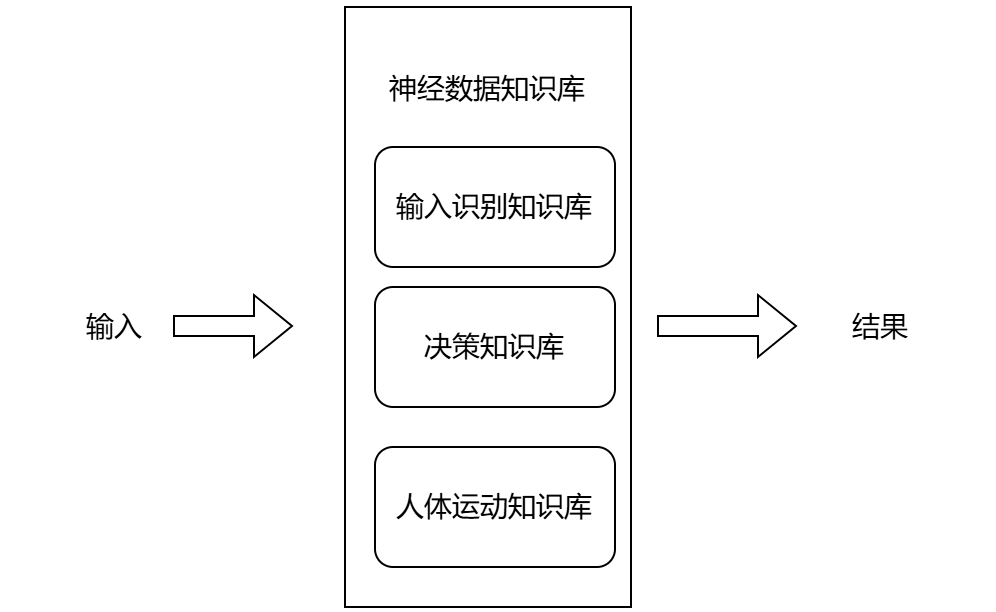
依靠人类知识所构建的知识库,依据输入直接产生对应的输出
- 在这个过程中有别于传统人工智能的是:
1)不需要机器学习。
2)人工学习后的知识转移和更新更高效。
3)算法关注于更高效更快的提取数据库知识以及知识的科学表达。
4)算法的使用环境的柔性在于知识分类定义和表达的科学性,知识库的完整性和知识库的相互关联性。
- 关于几个基本的知识库
- 输入识别知识库
- 人脑决策知识库
- 人体运动知识库
在获取输入信息后进行有效识别,人脑对于识别信息以及任务做出决策,在人体运动知识库中调取肢体执行的运动协调指令
[Definition of artificial intelligence HNAI in human brain neurotechnology]
1. Definition: The realization method of machine intelligence that produces mechanical automation by copying and purifying human intelligence is not mathematical models and mathematical simulations, but human intelligence. This is different from ordinary artificial intelligence that uses mathematical abstraction, and it is also different from brain-like artificial intelligence that mathematically simulates the biological structure of the human brain.
2. Follow the scientific philosophy that artificial evolution cannot surpass natural evolution.
3. Do not pay attention to machine learning and human learning and innovation, and at the same time conditionally copy and transform the results of human learning and innovation into machine intelligence algorithms at high speed.
4. Its replication principle is based on the professional intelligent algorithm obtained from the big data statistics of human nerve data (brain, various organs, limb muscles, etc.).
5. Ordinary artificial intelligence is an algorithm based on mathematical abstraction, which is at most trained through neural data.
6. Brain-like intelligence is a mathematical simulation of the biological neural operation method of the human brain.
【Current Technology Development】
1. Current development: No open programmed replication of human intelligence has been found, only the theoretical verification through brain driving in 2025 has been successful, and the curing of programmed chips and commercialization of programs have not yet been found.
2. China is still in the field of medical ethics control (Shanghai Huashan Hospital Brain Driving) and has not yet been involved in commercial use.
3. The technical complexity of the implementation of this technology is not high: According to data statistics, Huashan Hospital only completed the brain driving test of the first Parkinson’s patient implanted with electrodes in half a year.
【Attitude of the Technology Governance】
- Due to the complete threat to religion and democratic system, it is necessary to prohibit all social applications of this technology (including government social governance).
- It is forbidden to obtain and copy all consciousness other than the wisdom required for mechanical automation.
- At the same time, due to its low-cost acquisition of artificial intelligence capabilities and the huge driving force of scientific and technological economic development, it is necessary to formulate perfect neurolegal protection, copying, transfer, storage, trading of specific human brain intelligence, as well as standard human neural data samples for international joint legislative control, while protecting religious beliefs and democratic systems.
- Due to the decline in brain-computer interfaces and computing power prices, this technology has been fully entered into personal home research, as well as the economic temptation of this technology.
【Basic Principle Framework】
- Data acquisition framework

In professional work, by obtaining and analyzing human working memory and other neural data (vision, hearing, limb, etc.), the relevant neural data knowledge base is established, and it is decomposed into input recognition knowledge base, decision-making knowledge base, and human movement knowledge base according to general knowledge expression programs.
- After obtaining the professional work neural data knowledge base and decomposing it, use the decomposition knowledge base to guide the mechanical automation of human-like operations.

A knowledge base built by human knowledge (memory) directly produces corresponding outputs based on inputs
3. What distinguishes it from traditional artificial intelligence in this process are:
1) No machine learning required.
2) Knowledge transfer and update after manual learning are more efficient.
3) The algorithm focuses on more efficient and faster extraction of database knowledge and scientific expression of knowledge.
4) The flexibility of the algorithm environment lies in the scientific definition and expression of knowledge classification, the integrity of the knowledge base and the interconnection of the knowledge base.
4. About several basic knowledge bases
a) Enter the identification knowledge base
b) Human brain decision knowledge base
c) Human movement knowledge base
After obtaining the input information, the human brain makes decisions on the recognition information and tasks, and retrieves the motor coordination instructions performed by the limbs in the human movement knowledge base


发表评论